Ingredients
Method
- Set the oven to warm (optional). Heat to 200°F so you can keep muffins and lobster warm while you poach eggs.
- Melt butter for the hollandaise. Melt 1/2 cup butter until hot and fully liquid. It should look clear and steamy, not browned.
- Toast the English muffins. Toast until golden with crisp edges. Set aside (or keep warm in the oven).
- Warm the lobster gently. In a small skillet over low heat, melt 2 tbsp butter. Add lobster, a pinch of salt and pepper, and warm 1–2 minutes until just heated through. You’re looking for a gentle sizzle, not browning. Add lemon juice and herbs, then remove from heat.
- Make the Cajun hollandaise (blender method). Add egg yolks, warm water, and lemon juice to a blender. Blend 10–15 seconds until lighter in color.
- Stream in hot butter slowly. With the blender running on low, pour in the hot melted butter in a thin stream. The sauce should turn glossy and thicken enough to coat a spoon.
- Season the hollandaise. Add Cajun seasoning, smoked paprika, and cayenne (if using). Blend briefly. Taste and adjust with a pinch of salt or an extra squeeze of lemon for brightness.
- Hold hollandaise warm. Pour into a small bowl and cover. Keep it near the stove, or place the bowl over warm (not simmering) water.
- Prepare poaching water. Bring a wide pan of water to a gentle simmer. Add vinegar. You should see small bubbles rising—no aggressive boiling.
- Poach the eggs. Crack each egg into a small cup. Stir the water gently to create a slow swirl, then slide in an egg. Poach 3–4 minutes until whites are set and yolks feel softly springy. Lift with a slotted spoon and drain on a paper towel.
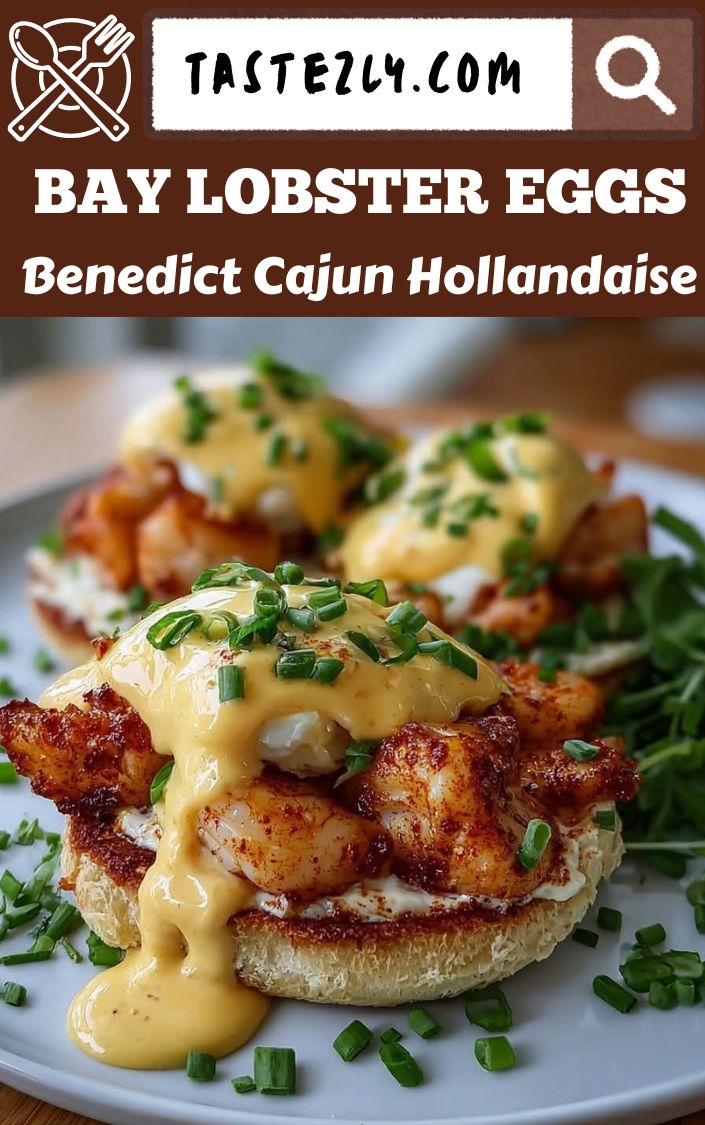
- Assemble the base. Place toasted muffins on plates. Spoon warm lobster onto each muffin half.
- Finish and serve. Top with poached eggs, then spoon Cajun hollandaise over the top. Look for the sauce to drape in thick ribbons. Finish with black pepper, chives, and lemon wedges.
Notes
The calmest way to make ultimate bay lobster eggs Benedict rich creamy Cajun hollandaise at home is to think in layers and temperature. Hollandaise wants warmth, eggs want gentle heat, and lobster wants almost no heat at all—just enough to wake it up. If you keep that in mind, everything falls into place.Start with the muffins first. Getting them toasted and ready means you won’t be juggling bread while eggs are poaching. Once toasted, you can keep them warm in a low oven so they stay crisp at the edges. Next, warm the lobster briefly in butter. Because it’s already cooked, you’re not trying to brown it—just coat it and heat it through. If the butter starts bubbling aggressively, your pan is too hot. Lower the heat and let it warm quietly.For hollandaise, the biggest “aha” moment is what it looks like when it’s right. In the blender, the yolks and lemon will look pale and foamy first. As you stream in hot butter, the sauce should become shiny and thicker—like it could drape over the back of a spoon and hold a line when you swipe your finger through. If it’s too thick, add a teaspoon of warm water and blend. If it’s too thin, blend a little longer and make sure your butter is hot enough.Poached eggs are all about water behavior. You want a simmer that looks steady but calm. Crack eggs into small cups first so you can slide them in smoothly. If your whites spread too much, the water is too hot or moving too fast. If they don’t set, raise the heat slightly until you see small bubbles again.Finally, assemble quickly and serve immediately. Eggs Benedict is a “right-now” dish, and that’s part of its charm. When the yolk breaks and mixes with the Cajun hollandaise, the sauce becomes even creamier, richer, silky, and perfectly suited to sweet lobster.