Ingredients
Method
- Prep the salmon. Remove skin (and any pin bones). Chop salmon finely. Keep some texture—tiny pieces are good.
- Make the binding base. In a large bowl, whisk egg with lemon juice and Dijon (if using). This helps distribute flavor evenly.
- Combine meatball mixture. Add chopped salmon, panko, garlic, herbs, lemon zest, salt, pepper, and paprika/chili flakes if using. Mix gently until just combined.
- Chill if needed. If the mixture feels loose, refrigerate for 10–15 minutes so it firms up for shaping.
- Shape the meatballs. With damp hands, roll into 1 1/2-inch meatballs (about golf ball size). Place on a plate.
- Heat the pan. Warm olive oil in a large skillet over medium heat until it shimmers.
- Sear the first side. Add meatballs with space between them. You should hear a gentle sizzle. Let them cook 2–3 minutes without moving until the bottoms turn golden.
- Turn carefully. Use tongs or a spoon to turn meatballs. Cook another 2–3 minutes, turning as needed, until you see golden patches all over.
- Finish cooking. Lower heat slightly and cook 2–4 minutes more, until the meatballs feel firm but still springy. The center should be opaque and moist (not dry).
- Blend the avocado sauce. In a blender or food processor, combine avocado, yogurt/sour cream, citrus juice, herbs, salt, and garlic (optional). Blend until creamy.
- Adjust texture. Add water a tablespoon at a time until it’s silky and spoonable—thick enough to coat, thin enough to drizzle. Taste and adjust salt and citrus.
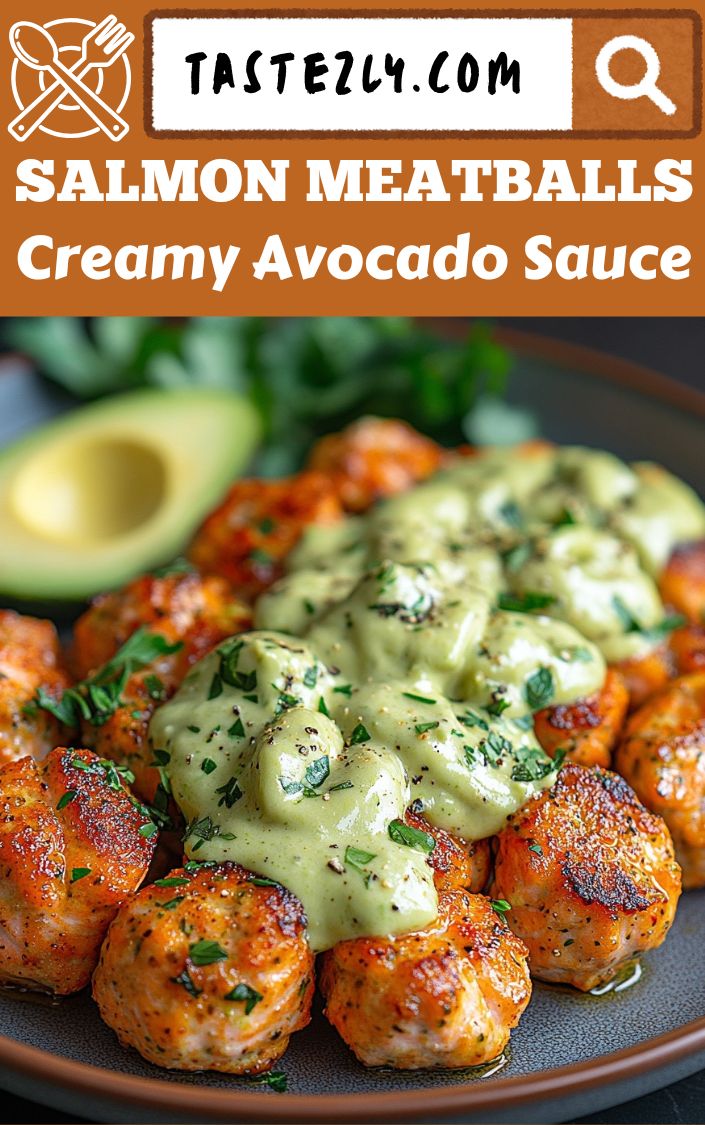
- Serve warm with cool sauce. Plate the salmon meatballs and spoon or drizzle the creamy avocado sauce over top. Finish with extra herbs and a squeeze of citrus if you like.
Notes
The key to making salmon meatballs that are tender—not dry, not tough—is treating the mixture like something delicate. Salmon is naturally rich, but it can become firm if it’s handled too aggressively. That’s why chopping is worth the extra few minutes. When you hand-chop the salmon, you keep little pieces that stay juicy and soft after cooking. If you want an even better bind, mince a small portion of salmon into a paste-like texture and mix that in—it acts like a natural “glue” without needing extra fillers.When mixing, stop as soon as everything holds together. Overmixing compresses the mixture and can lead to dense meatballs. If you’re unsure, do a quick test: shape one small meatball and set it on a plate. If it holds its shape without slumping, you’re good. If it feels too soft, chilling the mixture for 10–15 minutes makes a big difference. It gives the breadcrumbs time to hydrate and the mixture time to firm, and shaping becomes easier and cleaner.Cooking is about patience and gentle heat. Medium heat gives you that golden exterior without rushing the center. You’ll know the first side is ready to turn when the meatball releases easily from the pan. If it sticks, give it another minute—forcing it can tear the surface and make it harder to keep its shape. Keep turning gently until you see golden patches all around. The meatballs should feel springy when pressed lightly, not squishy.For the avocado sauce, focus on balance. Avocado + yogurt is creamy, but it needs citrus and salt to feel bright. Blend, taste, then adjust. If it’s too thick, add water slowly until it’s spoonable. If it tastes flat, add more lime or lemon a little at a time. That bright finish is what makes the whole dish feel light and fresh, especially against the warm, savory meatballs.