Ingredients
Method
- Pat scallops very dry with paper towels, then season lightly with salt and pepper on both sides.
- Prep lobster meat by cutting into bite-size pieces; keep it ready so it goes in quickly at the end.
- Heat a large skillet over medium-high and add olive oil and 1 tablespoon of butter until shimmering.
- Place scallops in a single layer and listen for a light pan sizzle; don’t move them while they sear.
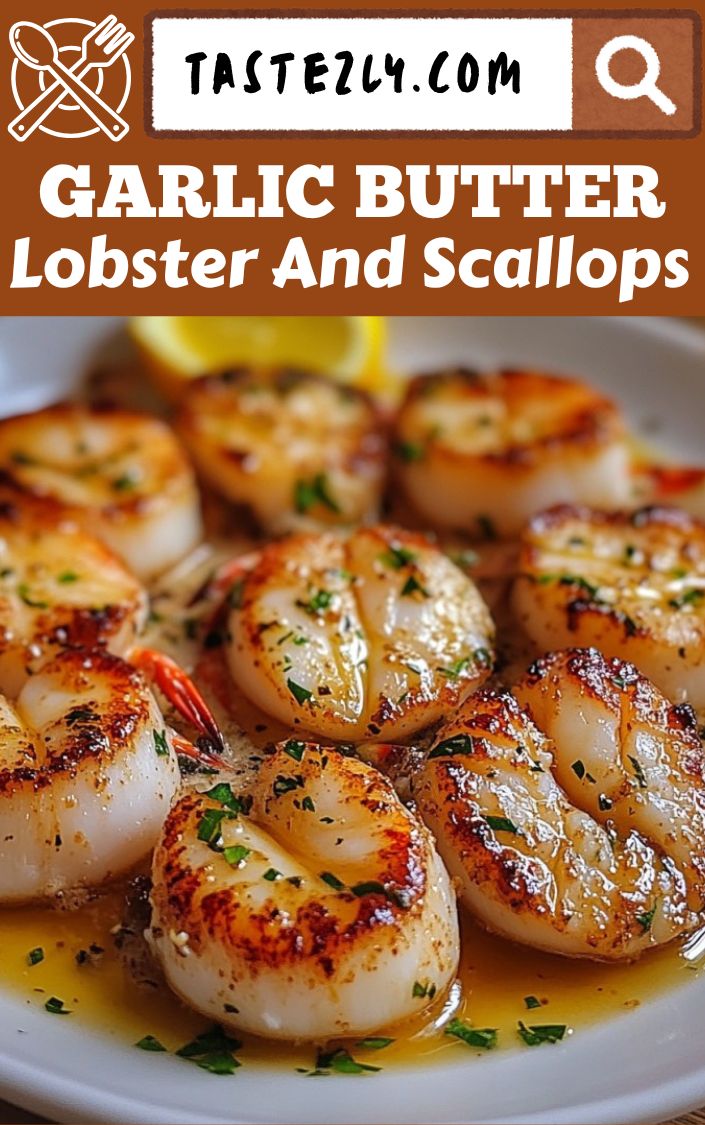
- Cook until the first side forms a deep golden crust and the scallops release easily from the pan.
- Flip and cook the second side briefly until the centers look opaque and springy, then transfer to a plate.
- Lower heat to medium and add remaining butter, letting it bubble gently without browning too fast.
- Add garlic and stir until fragrant and softened, watching closely so it doesn’t burn or turn bitter.
- If using wine or broth, splash it in and stir, letting it simmer and loosen the garlic butter into a glossy sauce.
- Add lobster meat and cook just until it turns opaque and tender (or warms through if already cooked).
- Return scallops to the skillet for a quick coat, then finish with lemon juice and a pinch of pepper.
- Spoon the garlic butter sauce over everything and serve immediately while it’s warm and silky.
Notes
Classic Garlic Butter Lobster and Scallops is all about timing and heat, and once you understand the order, it becomes surprisingly easy. Scallops should always go first. They need a hot pan and an undisturbed sear to develop that deep golden crust. If you add garlic or butter too early, it can burn while you’re waiting for the scallops to brown. Sear scallops in a mix of oil and a small amount of butter, then remove them once the crust is formed and the centers are just opaque and springy. Overcooked scallops lose their tenderness quickly.Lobster goes in last because it cooks fast. If it’s raw, it only needs a few minutes to turn opaque and tender. If it’s already cooked, it needs even less—just enough time to warm through in the garlic butter so it stays sweet and soft. This is where many people accidentally overcook lobster; they treat it like chicken and keep cooking “just in case.” With lobster, less time is better.Butter heat is the other detail that matters. Garlic should cook in butter that’s gently bubbling, not aggressively frying. If garlic browns too quickly, it turns bitter and takes over the whole dish. Lower the heat before adding garlic and stir often. If you want a looser, more spoonable sauce, a splash of white wine or seafood broth helps. It also picks up browned bits and helps the butter emulsify into something glossy instead of greasy. Let it simmer briefly, then add lobster.When you return scallops to the pan, you’re not “cooking” them again—you’re just coating them in sauce. Give them 30 seconds, then finish with lemon. Lemon is the quiet difference-maker here: it keeps the dish rich but not heavy, and it sharpens the seafood flavor without overpowering it.Make-ahead tip: You can prep seafood (dry scallops, cut lobster, mince garlic) earlier, but cook right before serving. That’s how you keep scallops crisp-edged and lobster tender.