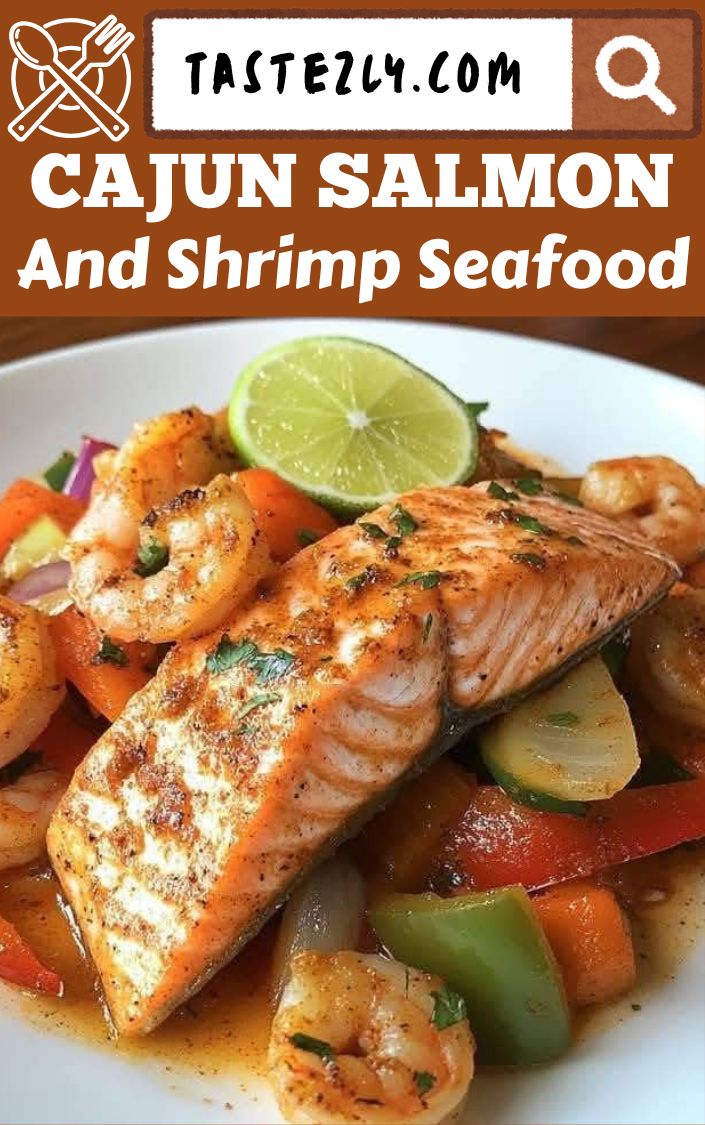
Ingredients
Method
- Pat salmon and shrimp dry with paper towels so they sear well and stay juicy instead of steaming.
- Mix Cajun spices in a small bowl, then coat salmon generously and shrimp lightly, letting them rest 10 minutes.
- Heat a large skillet over medium-high and add olive oil; it should shimmer before the fish goes in.
- Place salmon in the pan and listen for a gentle, steady sizzle as the Cajun spice turns deep and fragrant.
- Cook salmon without moving it for a few minutes until a crust forms and the edges begin turning opaque.
- Flip salmon and cook until the center is mostly opaque and flakes easily with gentle pressure, then remove to a plate.
- Lower the heat slightly, add a bit more oil if needed, and add garlic, stirring just until it smells warm and fragrant.
- Add shrimp in a single layer and cook until they start turning pink on the first side and curl slightly.
- Flip shrimp and cook just until fully pink and curled into a “C,” then remove so they don’t overcook.
- Add butter to the skillet and let it melt, scraping up the browned Cajun bits as it bubbles lightly.
- If using broth, pour it in and simmer briefly until the sauce looks glossy; finish with lemon to balance the heat.
- Return salmon and shrimp to the pan for a quick coat, then serve warm with lemon wedges and a spoonful of sauce.
Notes
Cajun Salmon and Shrimp is all about timing and heat. Salmon needs enough time to build a crust, while shrimp need only a few minutes total—so the order matters. Cook the salmon first, then remove it before it overcooks. The residual heat and a quick return to the pan at the end are plenty. Shrimp should always be the first finish. If you cook shrimp too long, they go from juicy to tight quickly, so watch for that moment when they turn fully pink and curl into a soft “C.”Pan heat is the second key. Cajun seasoning has paprika and garlic powder, which can scorch if the pan is smoking-hot. Medium-high is usually perfect: hot enough for a steady sizzle and a good sear, but not so intense that spices burn. If you see the seasoning darkening too fast or smelling bitter, lower the heat and add a small splash of broth to calm the pan.Oil and butter both have roles. Oil helps you sear without burning. Butter adds flavor and creates that glossy finish, but it can brown quickly—especially with spices—so I add butter near the end. When butter melts and lightly bubbles, it pulls up the browned bits and turns them into a quick sauce. A splash of broth helps stretch the sauce and makes it easier to coat the seafood, while lemon keeps the flavors balanced and bright.Seasoning balance matters too. If you’re using store-bought Cajun seasoning, taste it first. Some blends are saltier or hotter than others. If it’s very salty, use less added salt. If it’s spicy, reduce cayenne and rely on paprika for color and warmth. For a creamier finish, you can stir in a spoonful of cream at the very end, but keep it optional—sometimes butter and lemon are all you need.Finally, let the salmon rest for a few minutes after cooking. Resting keeps it juicy and helps it flake cleanly when served. Then return it to the pan only briefly, just to coat and warm.