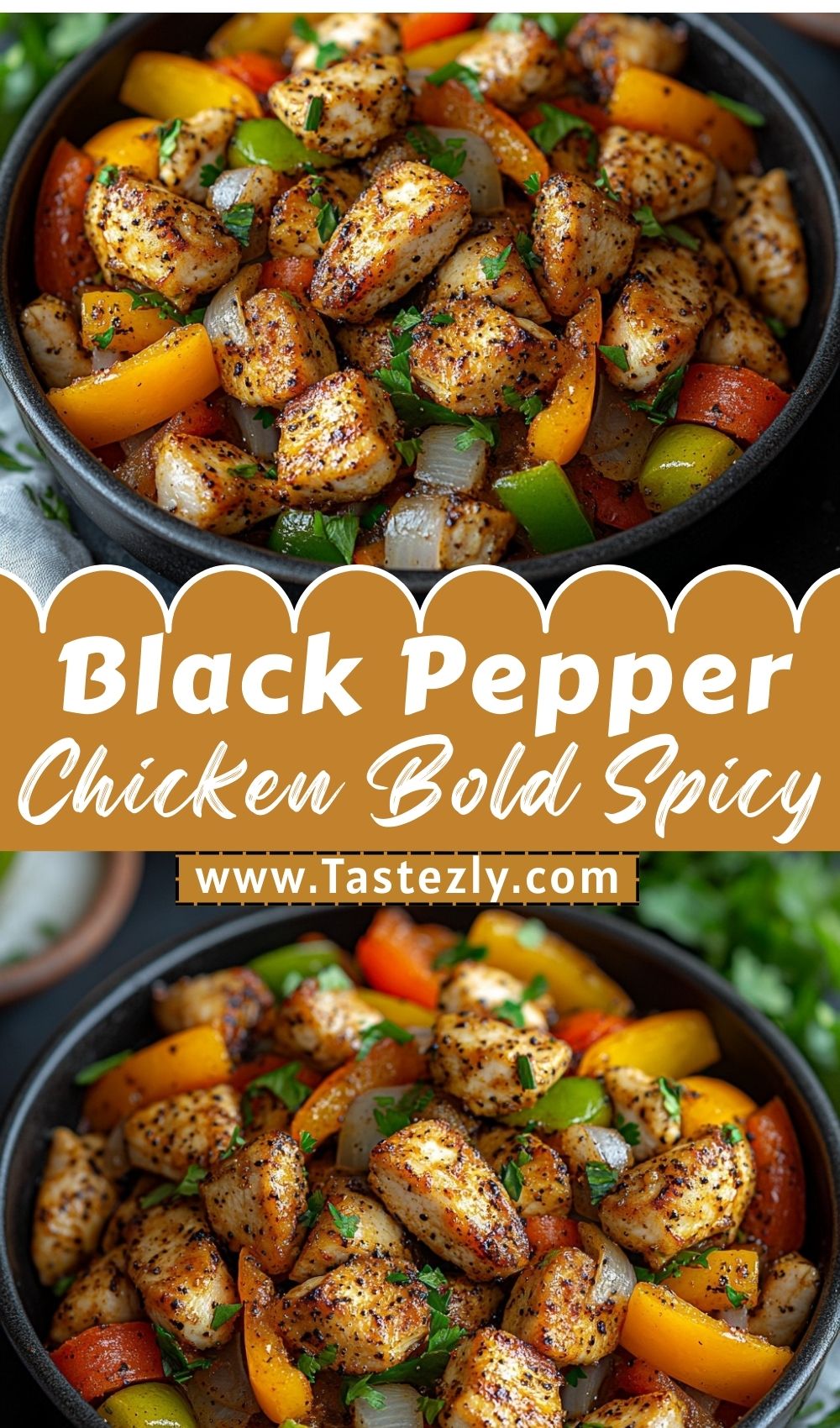
Some dinners begin with a plan, and some begin with a craving you can’t quite explain. For me, Black Pepper Chicken usually starts on a quiet weeknight when I want something warm and savory, but I don’t want to drag the whole evening into the kitchen. I’ll pull out a cutting board, set a skillet on the stove, and grind black pepper until the scent turns the air sharp and earthy. Freshly cracked pepper has a way of waking everything up, spicy but not smoky, bold but clean. It’s one of those ingredients that makes the kitchen feel alive before the cooking even begins, like the meal is already on its way.
When the pan heats, and the first bit of oil begins to shimmer, the sound is soft at first. Then the chicken goes in, and the sizzle sharpens, steady and bright, a quick reminder that this is going to be fast. The pieces start pale and glossy, then slowly take on color, with little golden edges, a faint caramel tone where the pan makes contact. Garlic and ginger drift in after, and suddenly the aroma deepens into something you’d swear came from a restaurant kitchen: savory, peppery, and just a little sweet. The vegetables follow bell pepper and onion, hitting the heat with a crisp crackle. They stay bright and snappy, just softened enough to feel tender while still holding their shape.
The sauce is the moment everything becomes one dish instead of separate ingredients. It bubbles gently as it hits the hot pan, turning glossy and dark, slipping into the spaces between chicken and peppers as it belongs there. The pepper doesn’t disappear, it blooms. It lingers at the back of your throat in a warm, steady way that feels bold but not aggressive. And when you finally toss everything together, you get that perfect balance: tender chicken, crisp-tender vegetables, and a sauce that clings instead of pooling. Black Pepper Chicken is the kind of dinner that tastes like you put in more effort than you did, comforting, punchy, and deeply satisfying without feeling heavy.
Why You’ll Love This Recipe
-
It’s a fast, one-pan main course that fits busy weeknights.
-
The black pepper flavor is bold and cozy without relying on tons of heat.
-
Chicken stays juicy with a simple slicing and searing method.
-
The sauce turns glossy and clingy in minutes, with no complicated steps.
-
Bell peppers and onions add sweetness and crunch for balance.
-
It tastes like takeout, but fresher and easier to adjust to your preference.
-
You can serve it with rice, noodles, or lettuce cups, depending on your mood.
-
Leftovers reheat well and stay flavorful the next day.
-
Easy to scale up for family dinners or meal prep.
-
The ingredient list is simple and pantry-friendly.
Ingredients
-
1 1/2 lb boneless, skinless chicken thighs or breasts, sliced into bite-size pieces. Thighs stay extra juicy; breasts work well if not overcooked
-
2 tbsp neutral oil (avocado, canola, or vegetable), divided (for searing and stir-frying)
-
1 medium yellow onion, sliced (adds sweetness and softness)
-
2 bell peppers, sliced (any color) (red/orange for sweetness; green for a slightly bitter edge)
-
3 cloves garlic, minced (deep savory aroma)
-
1 tbsp fresh ginger, minced or grated (bright warmth)
-
3–4 green onions, sliced (finish with a fresh bite)
-
Toasted sesame seeds (optional) (for a light nutty finish)
For the Black Pepper Sauce
-
1/4 cup low-sodium soy sauce (controls salt)
-
2 tbsp oyster sauce (adds depth and that restaurant-style savoriness)
-
1 tbsp hoisin sauce (gentle sweetness and body)
-
1 tbsp rice vinegar (balances richness)
-
1–2 tbsp brown sugar or honey (adjust to taste)
-
3/4 to 1 1/2 tbsp freshly cracked black pepper (start smaller, add more at the end)
-
1/3 cup chicken broth or water (helps the sauce coat everything evenly)
-
1 1/2 tbsp cornstarch + 2 tbsp water (slurry) (thickens into a glossy cling)
Optional for extra heat
-
Pinch of red pepper flakes or a drizzle of chili oil (only if you want it spicier than peppery)
Preparation or Marination
This recipe doesn’t require a long marination, but a quick 10–15 minute “prep soak” makes the chicken especially tender and helps it brown nicely. In a bowl, toss the sliced chicken with 1 tablespoon soy sauce and 1 teaspoon cornstarch (optional but helpful). The cornstarch creates a light coating that protects the chicken from drying out and gives it a soft, silky bite once it hits the sauce.
While the chicken rests, whisk the sauce ingredients together in a small bowl—soy sauce, oyster sauce, hoisin, rice vinegar, brown sugar, black pepper, and broth. Keep it close to the stove. Stir-frying moves quickly, and it feels calm when everything is ready before the pan gets hot.
INSTRUCTION
-
Slice and prep. Cut the chicken into bite-sized pieces and slice the onions and bell peppers. Mince garlic and ginger so everything is ready to move fast.
-
Make the slurry. In a small cup, mix cornstarch with water until smooth. Set it aside—this is what gives the sauce its glossy cling.
-
Whisk the sauce. In a bowl, whisk soy sauce, oyster sauce, hoisin, rice vinegar, brown sugar, black pepper, and broth. Taste it now; it should be bold and slightly sweet.
-
Heat the skillet. Place a large skillet or wok over medium-high heat. When the pan feels hot and a drop of water sizzles quickly, add 1 tablespoon of oil.
-
Sear the chicken. Add chicken in a single layer. Let it sit undisturbed for 2-3 minutes until the underside takes on a golden color. Stir and cook another 2-3 minutes until mostly cooked through. Transfer to a plate.
-
Add oil again. Pour in the remaining 1 tablespoon of oil. This helps the vegetables stir-fry instead of steaming.
-
Bloom the aromatics. Add garlic and ginger, stirring for 20-30 seconds until fragrant. You want a gentle sizzle and that warm, pepper-friendly aroma, don’t let it brown.
-
Stir-fry the vegetables. Add onions and bell peppers. Cook 3-4 minutes, tossing often, until the peppers brighten and soften slightly but still keep a crisp snap.
-
Return the chicken. Add the chicken back to the pan, including any juices on the plate. Toss everything together for a minute so the flavors start to mingle.
-
Pour in the sauce. Give the sauce a quick stir, then pour it around the pan. It should bubble gently as it hits the heat.
-
Thicken to glossy perfection. Stir in the cornstarch slurry and keep tossing for 30-60 seconds. The sauce will go from thin to shiny and clingy, coating the chicken and peppers evenly.
-
Finish and serve. Turn off the heat. Fold in green onions and (optional) sesame seeds. Taste and add a touch more cracked pepper if you want that extra bold edge.
Recipe Time and Details
-
Prep Time: 15 minutes
-
Cook Time: 15 minutes
-
Total Time: 30 minutes
-
Servings: 4
-
Courses: Main Course
-
Cuisines: Chinese-American, Asian-inspired
-
Calories: 430 per serving estimate, without rice
Flavor and Texture Tips
-
Use freshly cracked pepper. Pre-ground pepper tastes flatter; fresh pepper blooms in the sauce and smells more vibrant.
-
Don’t overcrowd the pan. If the chicken is packed in, it steams instead of browning. Brown in batches if needed.
-
Keep vegetables crisp-tender. Cook peppers just until they soften slightly. Bright color is your cue to stop.
-
Add the slurry slowly. If you want control, drizzle the slurry in while tossing until the sauce looks glossy and clings.
-
Taste at the end. Pepper intensity grows as it sits. Start moderate, then add extra cracked pepper right before serving.
Serving Ideas
Black Pepper Chicken loves a simple base that soaks up sauce. Steamed jasmine rice is classic and comforting, especially when the sauce pools just a little at the bottom of the bowl. Brown rice works too if you want something nuttier. If you’re in the mood for noodles, serve it over lo mein-style noodles or even plain spaghetti in a pinch the sauce is bold enough to carry it.
For something lighter, tuck the chicken and peppers into crisp lettuce cups with extra green onions and a squeeze of lime. A quick cucumber salad on the side cucumbers, rice vinegar, pinch of sugar, pinch of salt is refreshing against the peppery warmth. And if you’re feeding people with different spice preferences, put extra cracked pepper or chili oil on the table so everyone can adjust their bowl.
Storage and Reheating
Store leftovers in an airtight container for up to 3 days. Reheat in a skillet over medium heat with a splash of water or broth to loosen the sauce and keep the chicken tender. The microwave works fine too cover loosely and stir halfway through so it heats evenly.
Recipe Notes
The easiest way to make Black Pepper Chicken taste as if it came from a restaurant kitchen is to focus on two small things: heat management and timing. Start with a hot pan. Not smoking-hot, but hot enough that the chicken sizzles immediately and doesn’t release liquid right away. That first sear is where a lot of flavor is built. If you can, spread the chicken into a single layer and let it sit. You’ll see the edges start to turn golden, and that’s your cue that you’re getting really brown, not just cooking.
Once the chicken is mostly done, pull it out. This step matters more than it seems. Chicken finishes quickly, and if you keep it in the pan while you stir-fry vegetables, it can go from juicy to a little chewy. Removing it gives the vegetables the space they need to cook properly, and it protects the chicken’s texture. When you add it back later, it finishes gently in the sauce, which is exactly where you want it.
The vegetables should stay crisp-tender. Bell peppers are best when they still have a little snap, and onions are best when they’ve softened but haven’t melted away. You’re aiming for bright color and a slight sheen those visual cues usually mean the texture will be right.
For the sauce, whisk it before you start cooking and keep it within reach. When it hits the hot pan, you should see bubbling around the edges. That gentle bubble helps the sauce thicken and coat. The cornstarch slurry is a small trick with big payoff: it transforms the sauce from “liquid” to “glossy,” so it clings to chicken instead of sliding off. Add it gradually if you want control, and stop as soon as you like the texture.
Finally, remember that black pepper grows bolder as it sits. Start with a moderate amount, then finish with a fresh sprinkle right before serving for the best aroma and punch.
FAQs
1) Is Black Pepper Chicken very spicy?
It’s more peppery than “hot.” Fresh black pepper gives warmth and bold flavor without the burn of chilies, unless you add extra heat.
2) Can I use chicken breast instead of thighs?
Yes. Slice it thin, sear quickly, and don’t overcook. A small cornstarch toss helps keep it tender.
3) What can I substitute for oyster sauce?
Mushroom “oyster” sauce is the closest swap. In a pinch, use extra soy sauce plus a little more brown sugar for balance.
4) How do I keep the sauce from getting too thick?
Add the slurry gradually and stop when it looks glossy. If it thickens too much, splash in a little broth or water.
Conclusion
There’s something deeply comforting about a dinner that’s bold without being complicated. Black Pepper Chicken is one of those meals that feels like a reset button at the end of a long day: the steady sizzle of chicken in the pan, the bright snap of peppers as they soften just enough, and the scent of fresh black pepper rising as the sauce turns glossy. It’s not fussy food, but it tastes like you paid attention, and that’s often what makes a weeknight dinner feel special.
What I appreciate most is how adaptable it is. Once you’ve made it once, you can adjust it to match your mood: a little sweeter, a little sharper with vinegar, bolder with extra cracked pepper, or spicier with chili oil. You can serve it over rice for classic comfort, spoon it into lettuce cups for something lighter, or stretch it with extra vegetables if you’re feeding a crowd. The method stays the same: sear, stir-fry, sauce, toss, simple steps that build real flavor.
If you try this Black Pepper Chicken, cook it while the pan is hot, and the ingredients are ready, then sit down and enjoy it while the sauce still clings and shines. It’s the kind of meal that makes an ordinary night feel a little more cared for.
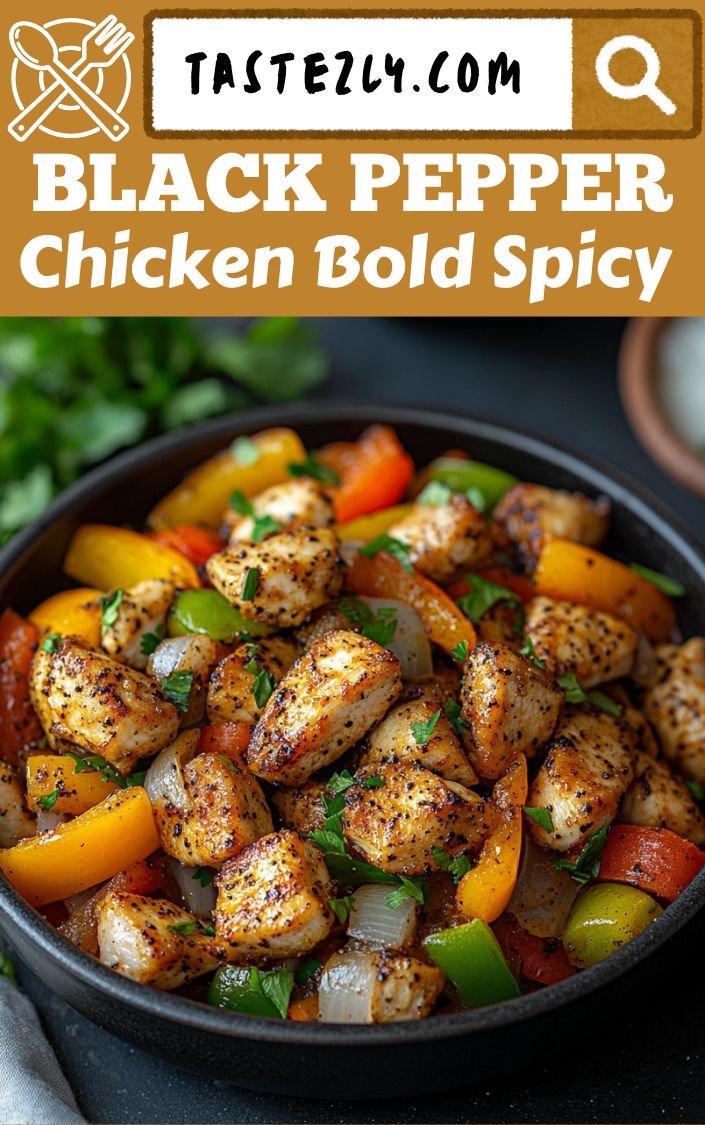
Black Pepper Chicken Bold Spicy & Full of Flavor
Ingredients
Method
- Slice and prep. Cut the chicken into bite-size pieces and slice the onions and bell peppers. Mince garlic and ginger so everything is ready to move fast.
- Make the slurry. In a small cup, mix cornstarch with water until smooth. Set it aside—this is what gives the sauce its glossy cling.
- Whisk the sauce. In a bowl, whisk soy sauce, oyster sauce, hoisin, rice vinegar, brown sugar, black pepper, and broth. Taste it now; it should be bold and slightly sweet.
- Heat the skillet. Place a large skillet or wok over medium-high heat. When the pan feels hot and a drop of water sizzles quickly, add 1 tablespoon oil.
- Sear the chicken. Add chicken in a single layer. Let it sit undisturbed for 2–3 minutes until the underside takes on golden color. Stir and cook another 2–3 minutes until mostly cooked through. Transfer to a plate.
- Add oil again. Pour in the remaining 1 tablespoon oil. This helps the vegetables stir-fry instead of steaming.
- Bloom the aromatics. Add garlic and ginger, stirring for 20–30 seconds until fragrant. You want a gentle sizzle and that warm, pepper-friendly aroma—don’t let it brown.
- Stir-fry the vegetables. Add onions and bell peppers. Cook 3–4 minutes, tossing often, until the peppers brighten and soften slightly but still keep a crisp snap.
- Return the chicken. Add the chicken back to the pan, including any juices on the plate. Toss everything together for a minute so the flavors start to mingle.
- Pour in the sauce. Give the sauce a quick stir, then pour it around the pan. It should bubble gently as it hits the heat.
- Thicken to glossy perfection. Stir in the cornstarch slurry and keep tossing for 30–60 seconds. The sauce will go from thin to shiny and clingy, coating the chicken and peppers evenly.
- Finish and serve. Turn off the heat. Fold in green onions and (optional) sesame seeds. Taste and add a touch more cracked pepper if you want that extra bold edge.